
Home » Best Insulated Roll-Up Doors for Canadian Climates
Best Insulated Roll-Up Doors for Canadian Climates
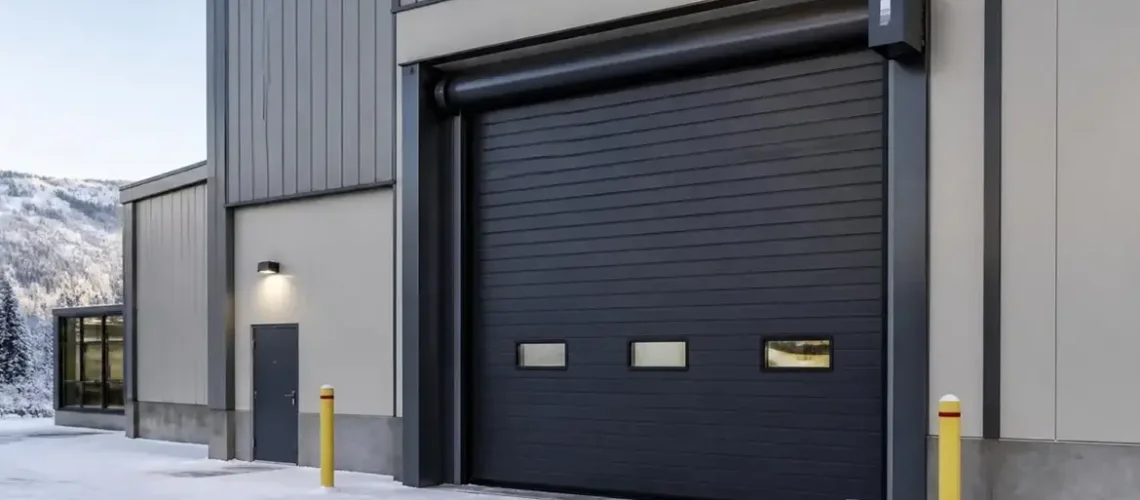
Picture this. It is a bitter January morning in Calgary, the thermometer reads -22°C, and you are standing in a warehouse trying to figure out why your heating bill looks like a phone number. Or maybe it is late July. Your shop floor in Newmarket feels like a sauna. The air conditioner is wheezing through another humid GTA afternoon, and everyone is sweating through their shifts.
Either way, there is a good chance the main culprit is hiding in plain sight. Your roll-up door.
Finding the best insulated roll-up doors for Canadian climates is no longer a luxury upgrade. It is the literal difference between a building that works with the weather and one that fights it every single day. Canadian buildings face an uphill battle. We deal with deep winter cold, heavy snow, intense summer heat waves, high humidity, unpredictable freeze-thaw cycles, and strong wind storms. A poorly chosen door leaves your space vulnerable to all of it, exposing you to severe moisture and condensation risks.
Proper insulation is the answer. It improves year-round energy efficiency, maintains indoor temperature stability throughout the seasons, and provides robust weather protection against snow, rain, heat, and wind. Plus, it guarantees comfort for occupants and workers, protects your sensitive equipment and products, and delivers massive long-term operational cost savings.
You deserve a door that protects what is behind it without forcing you to babysit it through every season.
Why Insulation Matters in Canadian Climate Roll-Up Doors
Let us be honest. A non-insulated roll-up door in Ontario is basically a giant heat-leaking metal curtain.
In January, it bleeds your furnace dry. In July, it lets in radiant heat, turning your warehouse into a slow cooker. Neither scenario is good for your equipment, your inventory, or your sanity. Thermally insulated roll-up doors solve this by trapping a layer of premium foam between two metal skins. That foam slows heat transfer in both directions. That is the trick most people miss.
Insulation is not just about keeping the warmth inside during our brutal winters. It is equally about heat resistance in the summer. When temperatures swing wildly from day to night, these doors prevent massive air leakage and control moisture and condensation risks. This gives your HVAC system a fighting chance, significantly reducing energy consumption year-round.
Why does that matter so much in Canada? Because we do not get one climate. We get five, and sometimes we get them all in the same week. Energy-efficient roll-up doors handle all that without you having to think about it, ensuring improved indoor comfort year-round and unwavering protection for your stored goods.
Key Features to Look for in Insulated Roll-Up Doors
When you are comparing options, you need to know what actually moves the needle. To get weather-resistant roll-up doors that survive local extremes, you need to look for these mandatory features:
- High-R-value insulation: Look for doors with high-density polyurethane or polystyrene insulated cores.
- Thermal break technology: This brilliant design element physically stops the cold from conducting straight through the metal frames.
- Advanced weather seals: You need heavy-duty seals at the top, bottom, and sides to keep drafts out in all four seasons.
- Corrosion-resistant finishes: Your door needs built-in protection to handle snow, road salt, and summer humidity without rusting out.
- Wind resistance ratings: Ensure the door is rated to withstand the wind speeds in storm-prone regions of Ontario.
- Heavy-duty tracks and hardware: You need components that will not freeze up or seize at -25°C.
- Quiet motorized operation: Look for smooth, motorized operation options that reduce noise for residential areas and busy commercial sites.
Skip any of these features, and you will feel it. Usually around 2 a.m. in February.
Best Materials for Canadian Climate Roll-Up Doors
Aluminum Insulated Roll-Up Doors
Aluminum is the lightweight champion of the door world. It naturally resists rust beautifully. This is a massive benefit when your door spends five months a year being splashed with snowmelt, ice, and road salt. It looks exceptionally sharp in modern homes, offers lightweight, smooth operation, and requires almost no maintenance. These are perfect for residential insulated garage doors and upscale storefronts where curb appeal counts just as much as thermal performance.
Steel Insulated Roll-Up Doors
Steel is the undisputed workhorse. When you need rugged security, high strength, and serious durability in extreme weather, this is the move. Commercial insulated roll-up doors and industrial environments almost always rely on steel because it handles impact, severe weather, and constant cycling without flinching. It also offers superior insulation potential. For example, a steel-insulated door with a polyurethane core from a Canadian manufacturer like Hörmann or TNR can achieve R-17.5 while still handling 50,000+ cycles in a busy GTA loading dock. For warehouses, cold storage facilities, and heavy distribution hubs, steel truly earns its keep.
Composite or Specialty Materials
For specialized commercial applications like pharmaceutical storage, food processing plants, or precision manufacturing, composite doors offer enhanced thermal performance. They provide unparalleled resistance to extreme seasonal swings. They might require a larger upfront investment, but for the right specialized use case, the math always works out in your favour.
Residential vs. Commercial Insulated Roll-Up Doors
Are these doors really that different depending on whether they go on a homeowner’s garage or a massive warehouse? Yes and no. The core physics are the same, but the priorities shift.
Residential Applications
When dealing with garages, home workshops, backyard structures, and storage spaces, the focus is heavily on comfort, curb appeal, and quiet operation. You want a door that opens smoothly at 6 a.m. without waking the neighbours and keeps your garage workshop warm enough to actually use in February.
Commercial & Industrial Applications
On the flip side, commercial spaces like warehouses, loading docks, retail facilities, cold storage spaces, and industrial buildings prioritize cycle durability, heavy security, and thermal performance at a massive scale. When a loading dock door opens 80 times a day, every single second of insulation loss adds up to real dollars. Industrial insulated doors are built to withstand the brutal daily grind.
Understanding R-Value in Canadian Climate Doors
R-value measures how well a material resists heat flow. The higher the number, the better the insulation. Simple enough, right?
Here is the real-world translation. A roll-up door with an R-value of 6 will lose heat roughly twice as fast as one rated at R-12. Over a long Canadian winter, that gap shows up on your utility bill in bright neon lights. It also dictates the impact on your seasonal performance.
For most Ontario commercial buildings, you want to hunt for high R-value roll-up doors in the R-12 to R-18 range. If you are operating a cold storage facility or a building in the far north, you will want to push that number even higher. For a milder-climate residential garage, R-9 might be plenty to see serious energy savings over time.
Do not get hypnotized by the number alone, though. A roll-up door for Canadian winters that boasts a massive R-value but suffers from poor weather seals is like wearing an expensive winter parka with the zipper wide open. Seasonal performance roll-up doors need both parts of the equation to function. Insulation and sealing.
Benefits of Insulated Roll-Up Doors in Year-Round Conditions
Year-round insulated doors pay you back in tangible ways you’ll notice on day one. Cold- and hot-climate roll-up doors do two jobs at once and do both quietly.
- Lower heating costs: Keep the warmth trapped inside during freezing Canadian winters.
- Reduced cooling costs: Block radiant heat during hot summer days.
- Steadier indoor comfort: Say goodbye to that annoying reality where the back of the shop is ten degrees colder than the front.
- Fewer drafts and air leakage: Eliminate that whistling wind sound and the cold breeze wrapping around your ankles.
- Superior protection: Keep your valuable inventory, vehicles, and equipment safe from snow, wind, and baking heat.
- Moisture control: Drastically reduce humidity and condensation, which can lead to rust and mould.
- Noticeable noise reduction: Create a quieter environment inside, and your neighbours will thank you for the silence outside.
- Longer equipment lifespan: Take the heavy strain off your HVAC system, helping your furnace and AC last years longer.
Motorized & Smart Roll-Up Door Features
Modern insulated overhead doors are no longer just simple slabs of metal. Smart features matter because every second a door is left open is a second of perfectly conditioned air escaping from your building.
Fast-opening and fast-closing motors, combined with smart building integration, can dramatically reduce that energy loss. Add in remote-controlled operation, precise automation schedules for commercial efficiency, and advanced safety systems, and you have a door that actively thinks about energy efficiency so you do not have to.
Maintenance Tips for Canadian Climate Roll-Up Doors
A little seasonal attention goes a long way to protect your investment. The freeze-thaw cycles in Toronto, Newmarket, and the broader GTA put doors through a brutal workout that milder regions never experience. Routine maintenance is not optional here. It is the price of admission.
- Do seasonal inspections: Check your door twice a year. Once before the deep winter sets in, and once before the summer heat arrives.
- Clean the weather seals: Wipe them down and check for cracks or tears.
- Lubricate tracks and hardware: Use a specifically cold-rated lubricant. The wrong grease turns to thick molasses at -20°C, burning out your motor.
- Prevent ice buildup: Regularly clear ice and snow away from the base of the door so it does not freeze shut to the concrete.
- Check insulation integrity: Inspect the panels for dents or damage after heavy storms.
- Manage condensation risks: Watch for moisture patterns on the door that hint your seals might be failing.
- Book professional servicing: Bring in a technician every 12 to 18 months to catch small wear-and-tear issues before they become expensive emergency repairs.
How to Choose the Right Insulated Roll-Up Door
Still wondering how to narrow down your options? Ask yourself these critical questions before making a purchase:
- What is your climate region? Where in Canada is the building, and what are the specific seasonal temperature extremes you face?
- What is the building usage? Are you storing temperature-sensitive pharmaceuticals or parking a tractor?
- How often does the door cycle? A door that opens twice a day needs a different motor than one that opens fifty times a day.
- Is security a top priority? If yes, lean heavily toward steel models and definitely consider insulated security shutters.
- What R-value makes sense? Match your insulation rating directly to your local climate zone.
- What is the budget and ROI? Look beyond the sticker price. Factor in the long-term energy savings and long-term maintenance costs.
- How important is installation quality? Spoiler alert: It is everything. Who is installing it, and do they understand local building codes?
Do not pick a door based on a shiny showroom photo. Pick it based on how it will perform in your specific building, climate, and job.
Why Professional Installation Matters
Here is where most door projects quietly go off the rails. You can buy the most expensive, top-tier insulated roll-up door on the market, but if it is installed sloppily, you have just bought yourself a very expensive draft generator.
Proper installation guarantees you actually get the thermal performance you paid for. An expert team ensures an accurate fit for seasonal sealing, optimizes your energy efficiency, and guarantees the structural safety of the heavy unit overhead. Professional installers also ensure reliable motor operation in extreme weather and, critically, ensure your manufacturer’s warranty stays fully protected.
How ROLLerUP Helps You Get This Right
You do not need another supplier trying to push their one specific product on you. You need a trusted guide who knows the Canadian market inside and out, has worked through brutal Ontario winters and humid Newmarket summers, and is not blindly loyal to a single manufacturer.
ROLLerUP is a premier dealer and authorized distributor working strictly with Canada’s top roll-up door manufacturers. We are proudly vendor-neutral. That means we recommend the exact right product for your space, your climate zone, and your budget.
Here is how our process works:
- We consult: Tell us about your space. We come out to measure, listen, and truly understand how you will actually use the door day to day.
- We specify: We match the right product from Canada’s top manufacturers to your needs. No bias, and no upselling on a brand we happen to own.
- We install and support: We install the door flawlessly and stand behind it. Your door performs exactly as promised, your warranty holds strong, and you have one local number to call if anything ever shifts.
Without the right door, you are looking at years of higher energy bills, drafty buildings, premature mechanical wear, and the slow, frustrating feeling that you could have done better.
With the right door? You stop thinking about it entirely. The building just works.
Ready to spec the right insulated roll-up door for your home or business in Newmarket, the GTA, or beyond? Book a free consultation with ROLLerUP today. Get your free quote and on-site measure within 48 hours.
Facebook
Twitter
LinkedIn
Pinterest