
Home » How to Choose the Right Roll-Up Door or Roller Shutter for Your Space
How to Choose the Right Roll-Up Door or Roller Shutter for Your Space
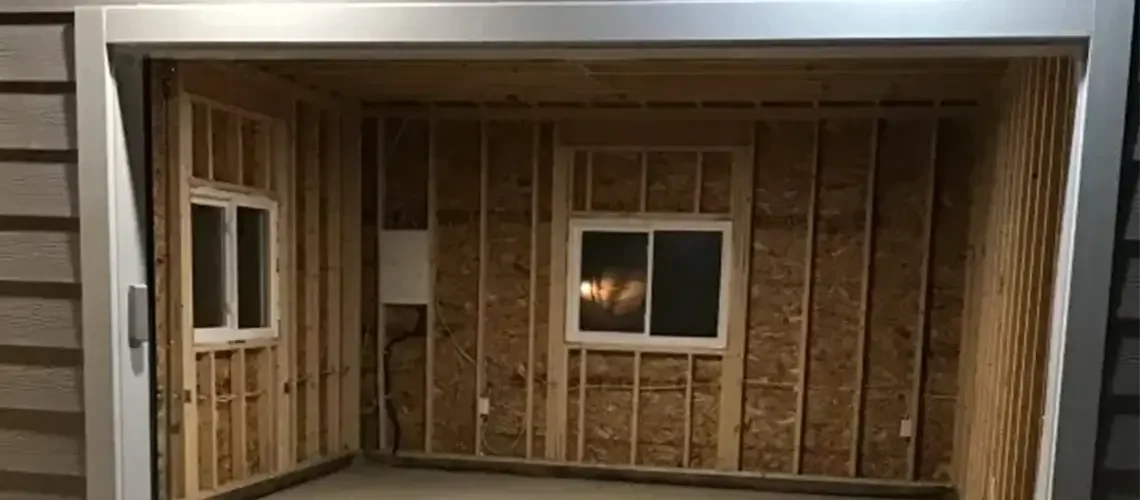
Picking a roll-up door or roller shutter isn’t the same as buying a sectional garage door off a shelf. You’ve got to measure the opening properly, the shutter box has to fit somewhere, and the guides need to land on something solid. And the whole assembly has to handle Toronto’s freeze-thaw winters and humid summers without complaint.
Get the size wrong? You’re left with a product that binds, looks awkward, or fails inspection. Get the application wrong? You’ve spent good money on the wrong tool for the job.
On the surface, the problem looks simple: you need to cover an opening. Underneath, you’re juggling break-in risk, weather damage, sun glare, and the nagging worry that the wrong product will look out of place on your home or storefront. And even deeper still, you deserve a property that feels secure and looks the way you pictured. Without a month-long headache to get there.
At ROLLerUP in Newmarket, Ontario, the focus is on custom aluminum roller shutters and custom roll-up garage doors for windows, doors, garages, laneways, storefronts, patios, and commercial spaces across the Greater Toronto Area. These are different products from traditional sectional overhead doors. And the selection process? Different too. Here’s how to think it through.
Need help choosing the right roll-up shutter or roll-up door? Contact ROLLerUP for expert measuring, product guidance, and professional roll-up door installation across the GTA.
Key Takeaways
- Roll-up shutters and sectional garage doors aren’t the same product. Roll-up shutters coil into a compact box above the opening, which changes how you measure and install them.
- Five measurements matter most: opening width, opening height, mounting surface, side clearance for guide rails, and top clearance for the shutter box.
- Application drives the spec. A laneway garage, a Yonge Street storefront, and a bedroom window all need different shutters, controls, and accessories .
- Motorized operation with remotes, keypads, weather sensors, and manual overrides is standard for most installs in the GTA.
- Custom sizing is the norm in older Toronto neighbourhoods and laneway builds where openings rarely match standard dimensions.
Identify Where the Roll-Up Door or Roller Shutter Will Be Used
The application sets the whole spec sheet. Before anything else, figure out what the shutter has to do for you.
Residential garages and laneways. Toronto’s laneway housing boom has created real demand for compact, secure roll-up solutions. A recent ROLLerUP install of laneway roll-up doors included both remotes and a keypad for emergency manual override. That kind of setup works well where you want quick access. No fumbling for a fob in the rain.
Windows and doors. Aluminum roll-up shutters can be mounted either inside the opening or on the face of the building. They can sit within the window or door opening, or above it, depending on the architecture. Older homes in Cabbagetown or Leslieville often need face-mount installs. Why? There’s no recess to hide a box.
Storefronts and commercial entrances. Storefront security shutters protect glass, deter break-ins, and roll up out of sight during business hours. A recent Pentagon-supplied DefendaGuard rolling security shutter, quoted for a commercial site, measured 2,900 mm wide by 1,338 mm high, with a 205 mm box and a Somfy remote motor with a manual crank override. Those are real numbers for a real opening. And they show why custom sizing matters.
Industrial and commercial spaces. Warehouses, auto shops, and service bays in Etobicoke and Mississauga often need larger shutters. Heavier-duty bottom bars. Reinforced guides.
How to Choose the Right Roll-Up Door or Roller Shutter Size
Measuring is where most DIY projects go sideways. So what do you actually check?
Measure the opening width and height. Record the clear opening. Not the trim. Pentagon shop drawings list curtain width “excluding guide rail” and height “excluding box and bottom bar,” which is the industry convention.
Check the mounting surface. Guides need a flat, solid substrate. Brick, block, wood framing, and aluminum cladding all work. But each needs different fasteners. Surface-drilled guides, such as the 83 mm profile on the Pentagon DefendaGuard, need a backing surface that’ll hold anchors for decades.
Check side clearance for guide rails. Guide rails sit on either side of the opening. You need enough wall to mount them without crowding a window jamb. Or a downspout.
Check the top clearance for the shutter box. This is the one most people miss. The box has to live somewhere. ALUTECH lists three common mounting schemes: partial overlap of the opening, mounting above the opening, and mounting within the opening for retrofit work. A built-in box can also be insulated within the housing recess to improve thermal performance. The Pentagon quote referenced above used a 205 mm box. That gives you a sense of how much space to plan for.
What Features Matter Most?
You’re not just buying a curtain on a roll. You’re buying solutions to a handful of problems at once: weak entry points, weather damage, glaring afternoon sun, and the background worry that comes with leaving a property unattended overnight.
Security. Aluminum curtains with autolocks at the bottom bar resist forced entry. The Pentagon spec included both coil-side and non-coil-side autolocks.
Weather protection. Shutters block wind-driven rain, hail, and UV. Pentagon notes that in high-wind locations, wind bars may be advisable. Worth thinking about for lakeshore properties in Etobicoke. Or exposed sites in Vaughan.
Energy efficiency and comfort. A built-in shutter box can be insulated with heat-insulating materials within the housing to improve thermal performance. The shutter itself adds an air barrier in front of the glass. Energy-efficient roller shutters help during a polar vortex week in January.
Noise and privacy. A closed aluminum curtain dampens street noise and blocks sightlines into the home or shop.
Manual vs. Motorized Roll-Up Shutters
Manual operation uses a crank handle through the box because it’s reliable and works during power outages. The Pentagon DefendaGuard quote included a flex crank handle for manual override, even on a motorized unit.
Motorized operation is the default for most GTA installs. Somfy tubular motors with handheld remotes are common. And Talius systems can connect with home automation, weather sensors, timers, and master controls for whole-home setups. For multi-unit projects, planning the control configuration up front matters: individual, master, and sub-group control all need to be specified before ordering.
Standard vs. Custom Roll-Up Doors and Roller Shutters
Standard roll-up door sizes can work on new builds where openings are framed to common dimensions. Custom sizing is needed when the opening is non-standard, when mounting clearances are tight, or when the project involves a built-in housing or a specific architectural detail. In most older Toronto neighbourhoods, custom is the realistic answer.
Which Roll-Up Solution Is Right for You?
- Choose a roll-up garage door in Toronto if you’ve got a residential garage or laneway with limited headroom and want secure, weather-tight access with remote and keypad operation.
- Choose a roller shutter for windows or doors if you want security, privacy, sun control, and an air barrier without giving up your view during the day.
- Choose a commercial security shutter if you run a storefront, restaurant, or service business that needs after-hours protection while remaining invisible during the day.
Right-Sized, Right-Spec’d, Right Where You Need It: Your Roll-Up Roadmap
Choosing a roll-up door or roller shutter comes down to five things: where it’s going, how big the opening is, what’s around that opening, how you want to operate it, and what climate conditions it has to survive. Roll-up shutters aren’t sectional garage doors. Treating them that way leads to expensive mistakes.
ROLLerUP works with you in three straightforward steps. First, tell us about your space, and we’ll book a site visit to measure and assess. Second, we spec the right shutter from Canada’s top manufacturers based on your opening, use case, and climate exposure. Third, we install it and stand behind the work.
For most homes and businesses in the Toronto area, custom sizing is the realistic path. And a proper on-site assessment? Fastest way to skip the guesswork.
Ready to spec a roll-up door or shutter for your property? Get an Estimate today, and ROLLerUP will handle the measuring, the product selection, and the installation.
Facebook
Twitter
LinkedIn
Pinterest