Picture this. It is 6 AM on inspection day. Your facility manager just called, and the fire marshal is walking the property in two hours. Do you know whether the openings between your warehouse zones are protected to code? Do you have the certification paperwork for every fire-rated assembly on site?
If your stomach just tightened, you are not alone. Across the Greater Toronto Area and throughout Ontario, commercial property owners face the same uncomfortable truth. Passive fire protection is one of the most misunderstood parts of running a compliant building. These crucial systems sit quietly in the ceiling pocket above a service counter or loading bay until the day everything goes sideways. Then, they earn their keep in minutes.
The trouble is that most business owners struggle to tell the difference between standard security options and a fire-rated assembly. Or what rating their building actually needs. Or how often these systems need testing. That knowledge gap is where failed inspections, insurance headaches, and preventable damage live.
This guide walks you through what fire shutters are, where they belong, what the codes actually expect of you, and how ROLLerUP helps Newmarket and GTA businesses get it right the first time.
What Are Fire Shutters?
Definition of Fire Shutters
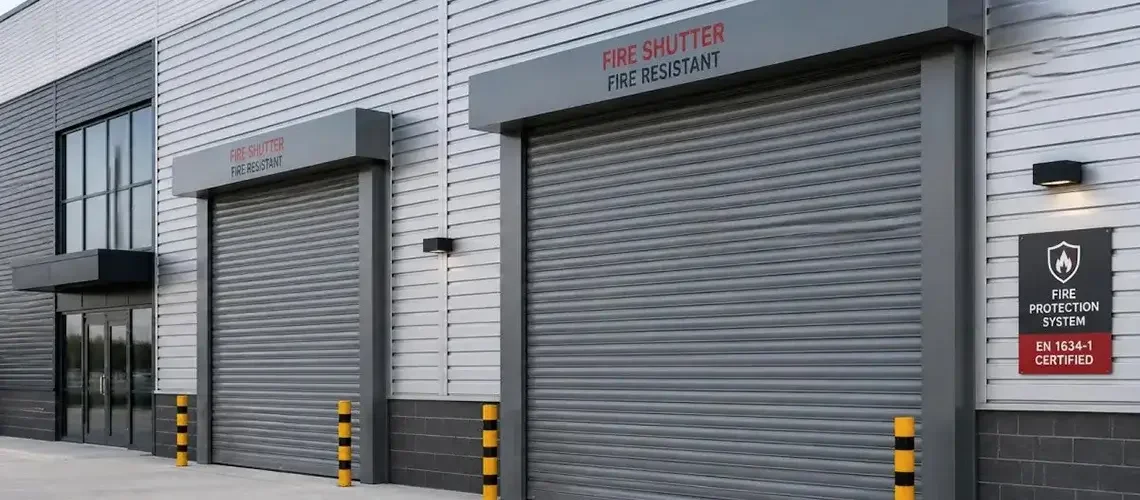
A fire shutter is a rolling assembly built and certified to resist the passage of fire and smoke for a specified period. Think of your commercial property as a series of compartments separated by fire-rated walls. Every opening in those walls, like a corridor, a service counter, or a conveyor pass-through, is a potential weak point. Specially designed fire-rated shutters seal those openings when things heat up, buying precious minutes for evacuation and emergency response.
How Fire Shutters Work
Most commercial fire shutter systems are tied directly into the building’s central alarm or detection network. When a signal is triggered by heat, smoke, or a pulled alarm, the shutter releases and descends in a controlled manner to seal the opening. Some older or simpler systems use fusible links that melt at a specific temperature to trigger the drop. Modern setups often use motorized fail-safe drops. Either way, the goal is always the same: close the gap before fire and smoke turn one compromised room into a structural disaster.
Fire Shutters vs Standard Security Shutters
Here is where many property owners get tripped up. It is like comparing apples to oranges. A solid system of commercial security shutters is built to stop break-ins, weather, and vandalism. It is tough, but it is not tested for fire resistance. A fire-rated assembly is a different animal altogether. It features different slat construction, specialized guide rails, a specific drop mechanism, and a formal listing tied to a documented fire test.
If your inspector asks for a rated assembly and you point to a standard security door, that is a failed inspection and a stack of paperwork you did not want.
Where Fire Shutters Are Commonly Used
Commercial Buildings
You will find commercial fire shutters working quietly behind the scenes in almost every kind of business space across Canada:
- Retail stores and sprawling shopping centres
- Warehouses and bustling distribution hubs
- Parking garages
- Schools and post-secondary campuses
- Hospitals and long-term care facilities
- Industrial and manufacturing plants
If your building utilizes fire-rated wall assemblies, and most commercial buildings certainly do, every opening in those walls needs a rated closure to maintain the barrier.
Interior vs Exterior Applications
Most fire protection shutters are installed indoors to manage compartmentalization. Common spots include openings between fire zones in larger facilities, loading dock transitions, pass-throughs in mixed-use buildings, and commercial kitchens where the cookline meets the dining area.
Aesthetic, low-profile fire-rated counter shutters are especially common in retail and foodservice environments such as arenas and cafeterias. They do serious compliance work without ruining the customer experience or drawing unwanted attention.
Why Fire Shutters Are Important
Fire Containment
A fire that remains contained to one zone for an extra 90 minutes is a fire your sprinkler system, your tenants, and the local fire service can actually manage. A fire that jumps compartments is the kind that ends up on the evening news. These systems act as the workhorses of passive fire protection because they do not require human intervention or panicked decision-making to do their job properly.
Life Safety Benefits
Every single minute matters during an evacuation. Rated assemblies protect corridors and stairwells from smoke infiltration, which is the primary danger to occupants in most building fires. That is not a sales pitch. That is the fundamental reason these safety standards exist.
Property Protection
Beyond life safety, there is the boring but very real business case: insurance premiums, operational downtime, and continuity. A contained fire might cost you the use of one room. An uncontained fire might cost you the entire building, your inventory, and six months of revenue. Which conversation would you rather have with your insurer?
Essential Commercial Fire Shutter Regulations
Building Code Requirements
Navigating fire shutter regulations can feel overwhelming. In Ontario, requirements flow from the Ontario Building Code and the Ontario Fire Code, which reference broader standards for fire separations and opening protectives. Depending on your local jurisdiction, you might need specific commercial fire code shutters based on occupancy classification, building size, and the rating of the wall itself. Requirements vary by jurisdiction and project type, so a professional assessment is always recommended.
NFPA Standards
The big playbook to know is NFPA 80: Standard for Fire Doors and Other Opening Protectives. NFPA 80 governs the installation, inspection, testing, and maintenance of all fire door assemblies. If you are looking into NFPA fire shutters, this is the standard your local inspector is reading from. Additionally, NFPA 101 focuses on life safety, adding another layer of rules around egress and occupant protection. Meeting these fire shutter requirements is non-negotiable for commercial operators.
UL Fire Ratings
Every product we specify is third-party tested and listed by trusted organizations. UL fire shutters carry a label that tells you the maximum opening size, the fire resistance rating in minutes, and the assembly conditions under which the product was tested. If a product does not have a recognizable ULC or UL listing label, it is simply not a rated closure. End of story.
Fire Marshal & Inspection Compliance
The local fire prevention officer has the final say on your compliance status. They will want to see installation records, listing labels, and annual inspection reports. Keep that paperwork organized in a safe place. When the inspector arrives at your facility, you want to hand them answers, not send them on a scavenger hunt.
Fire Ratings Explained
What Fire Ratings Mean
A fire rating is a tested duration. It proves how long the assembly held back fire under standardized, rigorous test conditions. A 90-minute rating does not mean the door instantly fails at minute 91. It means it was certified to perform flawlessly for at least that long while exposed to extreme heat.
Common Fire Rating Levels
- 60-minute (1-hour): Common in lower-risk occupancy separations.
- 90-minute (1.5-hour): Frequent in retail spaces and mixed-use applications.
- 120-minute (2-hour): Used for heavier-duty compartmentalization.
- 180-minute (3-hour): Reserved for major fire walls and high-hazard separations.
Choosing the Correct Rating
Are you wondering which rating your facility requires? Fire ratings depend on the application and the wall rating through which the shutter penetrates. Your code consultant or architect specifies the required duration in accordance with local building codes. We supply and install the exact match to ensure you stay protected.
Types of Fire Shutters
Rolling Fire Shutters
Standard rolling fire shutters are the most common commercial option. Their space-efficient design rolls up into a tight coil above the opening, keeping the floor plan clear while offering robust, dependable protection. These fire-rated rolling shutters are perfect for wide warehouse expanses and industrial bays.
Counter Fire Shutters
For smaller openings like cafeterias, service windows, and concession counters, counter-style variants offer a sleek look. They provide all mandated protection while blending seamlessly into the interior design of a retail or hospitality space.
Automatic Fire Shutters
Modern facilities lean heavily on automatic fire shutters. These feature motorized deployment systems integrated directly with the building’s alarm. The moment a threat is detected, the automated system takes over, dropping the barrier without anyone needing to pull a manual release chain.
Smoke and Fire Combination Systems
Sometimes, heat is not the only enemy. Combination systems are engineered with specialized gasketing to block both flames and toxic smoke. This dual-threat handling is essential in environments where smoke migration poses a severe risk to evacuation stairwells.
Fire Shutter Installation Requirements
Professional Installation Importance
Buying the right product is only half the battle. Proper fire shutter installation by certified professionals is crucial. An incorrectly installed system will fail when you need it most. Certified installers ensure that the tracks, barrel, and drop mechanism meet the rigorous standards set by the manufacturer’s listing.
Integration with Fire Alarm Systems
Modern closures need to talk to your building. Automatic closing systems must be wired correctly to the central alarm panel, and emergency override features need to be properly calibrated. This ensures the barrier drops during a fire but can be managed by emergency responders if necessary.
Structural Considerations
You cannot just bolt heavy steel to drywall and hope for the best. The surrounding wall must have the structural integrity to support the mounting hardware and the weight of the coil. Opening dimensions and overhead clearance requirements must be measured perfectly to ensure the guides do not warp under stress.
Fire Shutter Inspection & Maintenance Requirements
Why Maintenance Matters
Here is a fact that surprises many owners: buying a code-compliant closure is not the finish line. Routine fire shutter maintenance is important because it ensures operational reliability, reduces your corporate liability, and keeps you on the right side of the law. Skip it, and you have a compliant product running an out-of-compliance program.
Inspection Frequency
How often should you be checking these systems? The fire shutter inspection requirements laid out by NFPA 80 mandate annual testing. Local code requirements may occasionally ask for more frequent visual checks, but a documented annual drop test is the industry standard you must adhere to.
Common Maintenance Tasks
A proper maintenance visit is thorough. Technicians will test the automatic closure mechanism to ensure it descends at the correct speed. They will check the guides and slats for physical damage or blockages. Motor inspections and battery backup checks are also performed to ensure the system continues to operate even if the building loses power.
Documentation Requirements
If it is not documented, it did not happen. You need strict inspection logs and compliance records. ROLLerUP helps coordinate this ongoing maintenance, so your annual paperwork is neatly filed and ready long before the fire marshal knocks on your door.
How to Choose the Right Fire Shutter System
Consider Building Type
A manufacturing plant in Newmarket has different needs than a boutique mall in downtown Toronto. The daily traffic, the materials stored on-site, and the layout of the building all influence the type of closure you need.
Understand Local Code Requirements
Requirements vary widely by municipality. Always check your local bylaws and the Ontario Building Code to understand what specific standards apply to your business category.
Verify Certifications
Never purchase a system that lacks clear third-party testing labels. Look for ULC or UL stamps that verify the product has passed rigorous laboratory fire tests.
Evaluate Operational Needs
Will this opening be used fifty times a day by forklift drivers, or is it a hallway divider that stays open year-round? High-cycle usage requires a different motor and spring setup than a closure that only moves during annual testing.
Work with Experienced Professionals
You did not get into business to memorize NFPA standards. Partner with trusted local experts who can translate the code, assess your property, and recommend the right path forward without the guesswork.
Fire Shutters vs Fire Curtains
Key Differences
You might hear fire curtains mentioned as an alternative. The key differences lie in construction materials and deployment systems. Curtains use flexible, fire-resistant fabric that drops down from a very compact headbox. Shutters use interlocking steel or aluminum slats. While curtains are excellent for tight spaces and complex architectural curves, they lack the physical robustness and security benefits of a solid metal barrier.
Which Option Is Better?
Which one wins? It requires application-specific guidance. For a sprawling open-concept office that needs invisible ceiling compartmentalization, a curtain might work beautifully. For a commercial warehouse loading zone that needs to withstand both fire and physical impact, a rolling metal shutter is the undisputed champion.
The Stakes Are Real. Let’s Get You Ready.
A failed fire code inspection means stop-work orders, occupancy delays, insurance complications, and, in the worst scenario, a fire that did not have to spread. None of that is theoretical. It happens to businesses every single year, usually because nobody made passive fire protection a priority until it was too late.
The good news? You do not have to figure this out alone.
ROLLerUP works with commercial property owners, contractors, and facility managers across the region. We translate the complex codes, specify the right products from our industry-leading partners, handle the installation, and keep you inspection-ready year after year.
Need help selecting a code-compliant system for your commercial property? Book your free commercial consultation with ROLLerUP today. One conversation, and you will know exactly where you stand.