

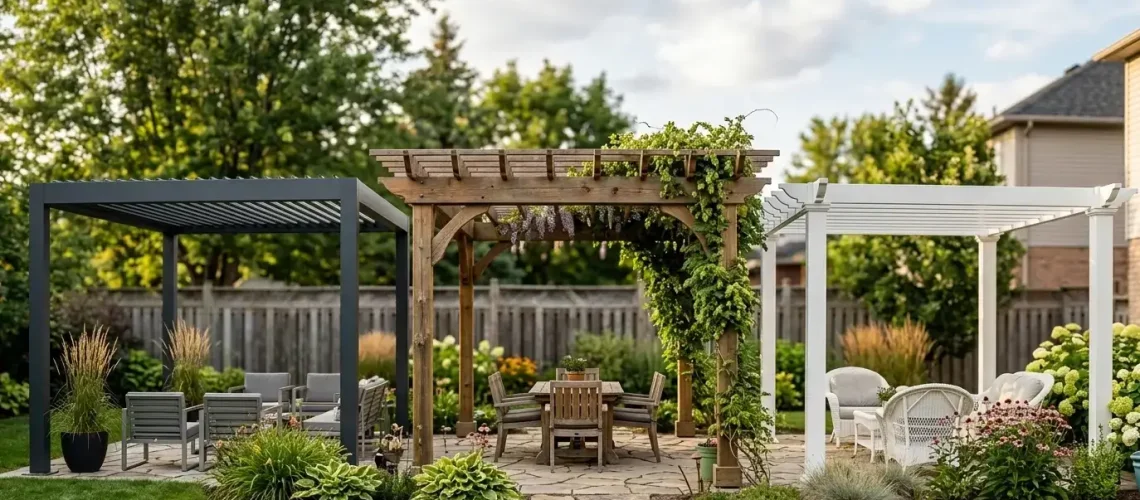
You are staring at your backyard, dreaming of a beautifully shaded oasis where you can sip your morning coffee or host lively weekend barbecues. However, as soon as you start researching online, the price tags seem to be completely all over the map. One website suggests a weekend project for a few hundred dollars, while another presents a quote that looks closer to the price of a used car. What exactly is going on here?
Figuring out the true pergola cost Canada has to offer can feel a bit like navigating a maze blindfolded. The reality is that pricing depends heavily on the core material, the specific size of your layout, necessary installation fees, and those incredibly tempting extra features. It is totally understandable to feel overwhelmed by backyard renovation budgets, but having the right information completely removes the anxiety from the process.
In this comprehensive guide, we break down the realistic, boots-on-the-ground costs of aluminum, wood, and vinyl pergolas. We will also weigh the long-term maintenance realities and specific Canadian climate considerations. Here at ROLLerUP in Toronto, we are experts in premium outdoor solutions. We want to equip you with the transparent facts so you can confidently make a brilliant investment for your home.
Key Takeaways
- Material dictates the baseline: Wood offers the lowest upfront kit price, but aluminum provides the best long-term value due to zero maintenance.
- Installation adds up: Professional installation, especially when frost footings are required in Canada, significantly increases the final price tag.
- Climate matters: Your pergola must be able to handle heavy Canadian snow loads and freeze-thaw cycles.
- Long-term costs are hidden: A cheaper wood kit today might cost you thousands in staining and repairs over the next decade.
Quick Cost Overview
To give you an immediate idea of what to expect, here is a breakdown of typical pergola costs across the country.
- Pricing Assumptions: These figures represent a typical range for a standard 10×10 to 12×12 foot structure. Please note that prices vary by province and do not always include custom concrete foundations, building permits, or complex electrical work.
| Pergola Type | Estimated Cost Range (CAD) |
| Wood pergola (kit) | $1,500 to $3,500 |
| Wood pergola (installed) | $3,500 to $7,000+ |
| Vinyl pergola (kit) | $2,000 to $4,000 |
| Vinyl pergola (installed) | $4,000 to $8,000+ |
| Aluminum pergola (standard) | $4,000 to $9,000+ |
| Louvered aluminum pergola (installed) | $25,000 to $30,000+ |
What Impacts Pergola Cost in Canada
Why do two pergolas of the exact same size have wildly different price tags? Let us lift the hood and look at the actual mechanics of outdoor pricing.
Size and Layout
The overall dimensions of your project naturally dictate the materials required. Contractors often calculate the pergola cost per square foot, which drops slightly as the structure gets larger due to economies of scale. Furthermore, an attached pergola (anchored directly to your house) might be slightly cheaper in materials than a massive freestanding structure, but it can occasionally incur higher labour costs due to the delicate work of attaching it safely to your exterior siding. Custom dimensions outside the standard kit sizes will also drive up the baseline price.
Foundation & Frost Requirements
We cannot simply place heavy structures on top of the grass in our climate. The freeze-thaw cycle will heave and ruin your beautiful new investment within a single winter. Foundation work is a major cost factor. You might require a poured concrete pad, significant deck reinforcement if installing over an existing patio, or specialized frost footings. Since the frost line in Canada can reach 4 feet or more, depending on your specific region, digging and pouring these footings add mandatory labour and material costs.
Roof & Shade Type
Are you looking for a little bit of dappled sunlight, or do you want full protection from the rain? An open slat pergola is the most budget-friendly option but less practical in Canadian weather as it will require constant outdoor furniture covering or pillow storage. The Canadian summers are usually rainy, which makes the open slat roof pergola for unused spaces unusable after a few seasons, causing inconvenience of use and abandoned looks. Upgrading to a fixed polycarbonate roof adds a layer of weather protection and cost, but blocks natural light into your house on sunny days and places the interior of your house in constant shade. However, the ultimate luxury is a louvred roof. Deciding between manual operation and a fully motorized system drastically changes the overall budget, but can also give you sun/rain sensors that will automatically open and close your louvres, providing shade or light when needed.
Add-Ons
Think of a basic pergola as a blank canvas. The add-ons are where your backyard truly transforms into a luxurious living room. Popular upgrades include motorized retractable screens to keep mosquitoes at bay in the evening, custom privacy walls to block out noisy neighbours, integrated LED lighting, and infrared heaters to extend your patio season into late autumn or into the entire winter if the temperatures are mild. You also have to consider integrated drainage systems and the hidden electrical wiring required to power these features safely. A louvered pergola can be an asset in the future as an upgrade to your house when and if you decide to sell the property, vs other pergolas that will look neglected and might be a deal breaker as the first impression of your backyard will be unpleasant.
Installation & Access
Never underestimate the logistics of getting heavy materials into your backyard. If you live in a dense urban centre like Toronto with incredibly narrow side yards, contractors have to move materials by hand. Limited access increases the time required for the job. Additionally, if you need demolition of an old, rotting deck or existing structures before the new foundation can be laid, your pergola installation cost in Canada will reflect that extra manual labour. When dealing with complex systems, investing in professional louvred pergola installation guarantees that the intricate drainage and motor components are calibrated perfectly the first time.
Also Read: Transform Your Outdoor Space with a Low-Maintenance Pergola
Aluminum Pergola Costs in Canada
Aluminum has rapidly become the gold standard for modern outdoor living, and for very good reason.
Standard Aluminum Pergola
A standard, fixed-roof or open-slat model is built using a heavy-duty, powder-coated aluminum frame. The beauty of this material is its incredibly low maintenance profile. It provides a sleek, modern appearance that pairs perfectly with contemporary Canadian homes. When researching the aluminum pergola cost in Canada, expect a higher upfront material cost than for a basic wood pergola, but remember you are paying for decades of worry-free ownership.
Louvred Aluminum Pergola
This is the absolute pinnacle of backyard luxury. A motorized adjustable roof allows you to pivot the overhead slats with the push of a button. You can angle them to catch the morning sun, or close them completely flat to create a watertight ceiling during a sudden summer downpour. Because these systems include integrated internal drainage to channel rainwater away, the louvred pergola cost is significantly higher per square foot. Some premium setups include the necessary electrical costs within the installation quote, but some can just be plugged into an outdoor plug. If you want to explore premium options, you can view our high-end aluminum pergola systems to see the difference quality makes. Our pergolas are designed for Canadian winters, allowing you to use it year-round and just closing the louvres during winter. If your provider tells you to keep the louvres open due to snow load, it’s a red flag that the pergola probably wasn’t designed for a winter here in Canada.
Think of a louvred pergola as a modern way to build an addition or a sunroom when it’s attached to your house. When equipped with outdoor retractable screens, you can keep insects and elements away, control the amount of sunlight that you want or create an open space when all screens are up. This type of structure looks light and modern, always looks fresh, vs the heavy old traditional sunrooms that require complicated permits and maintenance.
Pros & Cons
Pros:
- Minimal maintenance required (no sanding, no staining).
- Highly weather-resistant against rust, rot, and Canadian winters.
- Incredibly long lifespan.
Cons:
- Higher upfront financial investment.
- Mechanical components in louvred models require occasional check-ups (the louvres have to be cleaned just like your home’s gutters).
Wood Pergola Costs in Canada
Wood is the traditional choice, evoking a warm, rustic charm that many homeowners absolutely adore. However, pricing and maintenance vary widely depending on the exact type of lumber you select. High-quality lumber will reduce the need for wood treatment but cost you as much as aluminum.
Pressure-Treated Wood
This is generally the most budget-friendly entry point into backyard shade. Pressure-treated pine or spruce offers a much lower material cost, making the initial wood pergola in Canada quite attractive. The catch? It requires immediate, rigorous, ongoing maintenance. You must stain or seal the wood to protect it from moisture, and pressure-treated wood is notorious for warping or checking (splitting) as it dries out over the first year.
Cedar Pergola
If you want that premium natural aesthetic and a gorgeous scent, cedar is the way to go. A high-quality cedar pergola kit in Canada costs more than pressure-treated lumber because cedar contains natural oils that resist rot and boring insects. Despite its natural resilience, cedar still demands ongoing maintenance to keep its rich colour from fading to a weathered, silvery grey.
Pros & Cons
Pros:
- Highly customizable for unique shapes and cuts.
- Provides a beautiful, classic architectural appearance.
Cons:
- Requires annual or semi-annual maintenance.
- High risk of warping, cracking, or rotting over time.
- The long-term maintenance costs completely offset the initial savings. An open roof requires constant covering of your outdoor furniture.
Vinyl Pergola Costs in Canada
Vinyl represents a middle ground between the natural look of wood and the modern durability of aluminum.
What Vinyl Offers
Vinyl provides a clean, classic look with the massive benefit of low maintenance. You will never need to stand on a ladder with a dripping paintbrush because vinyl requires absolutely no staining. Often sold as pre-engineered kits, the vinyl pergola cost in Canada is quite appealing for homeowners who want a tidy, white, traditional structure without the weekend chore list.
Pros & Cons
Pros:
- Very affordable compared to custom aluminum.
- Maintains a consistent look year after year.
- Easy cleaning (usually just a quick spray with a pressure washer).
Cons:
- Structural limitations (vinyl kits often require internal wood posts for actual strength).
- Subject to heat expansion and contraction in extreme temperature swings.
- Offers far fewer premium design options and colours than other materials.
10-Year Ownership Cost Comparison
This is the section your local hardware store probably does not want you to read. Comparing the initial sticker price of these materials is a bit like comparing apples to oranges. You absolutely must consider the lifecycle cost to understand your true investment over a typical 10-year period.
Wood:
While the initial cost is the lowest, the hidden expenses add up fast. You will need to purchase premium stain and sealant every two to three years. If you hire a professional to sand and stain a 12×12 structure, expect to pay upwards of $1,000 each time. Over a decade, you could easily spend $3,000 to $5,000 just on maintenance, not to mention the likelihood of needing to replace boards due to rot or severe warping. The lack of a closed roof will also require several outdoor furniture replacements that will cost an additional 3k to 5k over the same period and a whole lot of frustration every time that they need paint or you have to replace anything in the pergola. That’s when they become a liability instead of an asset.
Vinyl:
The long-term financial cost is exceptionally low. Your main investment here is elbow grease. Cleaning only requires soap and water. However, you must factor in long-term discoloration considerations. Cheaper vinyl can turn brittle or yellow after a decade of harsh UV exposure, potentially requiring a full replacement much sooner than you anticipated, as it can develop cracks over the winter.
Aluminum:
The upfront cost is certainly the highest, but the 10-year maintenance cost is practically zero. You have minimal maintenance aside from clearing leaves out of the gutters. If you own a motorized louvred roof, you might encounter minor motor servicing, but the powder-coated finish durability means it will look exactly the same in year ten as it did on the day of installation. With the right louvred aluminum pergola, you can create a real outdoor oasis.
Snow Load & Canadian Climate Considerations
We cannot talk about outdoor structures without addressing the elephant in the room: Mother Nature’s frosty mood swings. A cheap, imported kit might look fantastic in a sunny California brochure, but how will it fare under two feet of wet, heavy January snow?
Snow accumulation is incredibly heavy. When you are gathering quotes, you must inquire about the pergola snow load rating. Standard open-slat wood and vinyl structures handle snow fairly well because the snow simply falls right through the gaps, but at the same time also make this space unusable during the winter. However, if you are installing a solid roof or a closed louvred system, structural strength differences become a matter of safety.
Furthermore, you need to consider wind ratings for intense autumn storms and the importance of integrated drainage to manage rapid spring melting. Always encourage transparency by asking your suppliers to provide actual engineering documentation regarding snow load limits before you hand over your deposit.
Which Pergola Material Is Best for You?
Still feeling a bit stuck? Use this straightforward decision framework to find your perfect match.
Choose Aluminum If:
- You want a strictly low-maintenance lifestyle.
- You prefer a sleek, modern architectural design.
- Want your pergola to always look fresh.
- You want the high-end louvred functionality to control your weather environment.
- You want peace of mind and get an asset that will increase the value of your property.
Choose Wood If:
- You absolutely love a natural, rustic aesthetic.
- You are entirely comfortable with committing to ongoing maintenance and staining and you have extra time to kill
- You want to paint the structure a very specific, custom colour.
- You are not planning to use your outdoor space most of the year.
Choose Vinyl If:
- You want a budget-friendly, low-maintenance solution.
- You prefer a traditional, classic white aesthetic.
- You do not need a roof that opens and closes.
Pergola vs. Patio Cover: Understanding the Real Value
Homeowners often use the terms pergola and patio cover interchangeably, but structurally and financially they are very different solutions.
A traditional pergola typically provides partial shade. Its open-roof design allows sunlight and airflow to pass through, which limits how much protection you get from the elements and bags.
A louvred pergola, however, takes that concept much further. With adjustable aluminum louvers, you can control the environment beneath the structure; open the roof to enjoy sunlight and airflow, or close it for full shade and rain protection. Think of a louvred pergola as a modern alternative to building an addition or sunroom when attached to your home.
When combined with outdoor retractable screens, the space becomes even more functional. You can keep insects and wind away, reduce glare, and create a comfortable outdoor living area while still maintaining the flexibility to fully open the space whenever you want.
Compared to traditional patio covers or enclosed sunrooms, a louvred pergola offers several advantages:
- Modern design that always looks light, clean, and contemporary
- Flexible control over sunlight, shade, and ventilation
- Less structural bulk compared to heavy wood-framed patio covers
- Lower maintenance materials, typically powder-coated aluminum
- Simpler permitting in many cases compared to full sunroom additions
Traditional patio covers with solid roofs are designed primarily for permanent weather protection. While effective, they require heavier structural framing, roofing materials to match the house, and sometimes more complex permitting, similar to building a permanent extension.
For many homeowners, a louvred pergola delivers the best of both worlds: the openness of a pergola with the functional protection of a patio cover, without the weight and maintenance of older-style sunrooms.
Also Read: Patio Privacy Screens in Toronto
What to Ask in a Pergola Quote
Never sign a contract based on a single bottom-line number. Protect yourself from hidden “gotcha” fees by asking your contractor these specific questions:
- Is the foundation included? Clarify if the price covers pouring standard concrete frost footings.
- What is the snow load rating? Ask for the exact weight capacity per square foot.
- What are the warranty details? Separate the warranty on the physical structure from the warranty on the motorized parts.
- Is electrical included? If you are getting lights or a motor, who is paying the licensed electrician?
- What is the installation timeline? Get a realistic start and finish date in writing.
- Who handles the permit responsibility? A pergola permit requirement in Canada varies heavily by municipality and structure size. Ensure you know who is pulling the paperwork.
FAQ
How much does a pergola cost in Canada?
A typical pergola in Canada costs anywhere from $1,500 for a basic DIY wood kit to over $35,000 for a fully installed, custom motorized louvred aluminum system. The final price depends heavily on the size, the material chosen, professional installation fees, and required frost footings. A project-specific assessment is required for an accurate number and to explore different features, such as retractable outdoor screens.
Is an aluminum pergola worth the cost?
Yes, for most homeowners, an aluminum pergola is highly worth the initial investment. While the upfront cost is higher than wood or vinyl, aluminum requires zero staining, does not rust or rot, and handles severe Canadian weather effortlessly. The long-term savings on maintenance usually offset the initial purchase price over a decade and increase your property value.
Is a wood pergola cheaper than an aluminum one?
Upfront, a wood pergola is significantly cheaper than an aluminum pergola. However, when you factor in the lifecycle costs of purchasing premium stain, sealant, and the sheer labour required to maintain the wood every two to three years, a wood pergola often ends up costing the same, if not more, over a 10-year period and becomes a liability instead of an asset.
Are vinyl pergolas durable in snow?
Vinyl pergolas are generally durable in the snow, provided they are engineered with internal wood or metal support posts. However, in extreme cold, cheap vinyl can become slightly brittle. It is crucial to verify the manufacturer’s snow-load documentation to ensure the specific kit can withstand heavy Canadian winter accumulation without cracking or collapsing.
Do I need a permit for a pergola in Canada?
Permit requirements vary significantly by municipality and province. Generally, if the pergola is attached to your home or exceeds a specific square footage (often 108 to 160 square feet, depending on the city), you will need a building permit. Always check with your local bylaws before beginning construction.
What is the cheapest pergola option?
The cheapest pergola option is a DIY pressure-treated wood kit or a basic vinyl kit. These can often be purchased for under $2,000. However, this route requires substantial “sweat equity” for assembly, and you must account for the immediate and ongoing costs of staining the wood to prevent warping and rot.
Your Backyard Oasis Awaits: Weighing the True Cost of Your Pergola Investment
Transforming your backyard into a personal sanctuary is one of the most rewarding home upgrades you can make. As we have covered, the true cost goes far beyond the initial sticker price. While wood offers a charming, budget-friendly start, it demands a heavy toll in weekend maintenance. Vinyl gives you a clean, easy-care classic look but often lacks the structural muscle to support heavy custom features. Aluminum stands out as the ultimate modern investment, offering unparalleled strength, zero maintenance, and the luxurious flexibility of adjustable shade.
At the end of the day, you want to invest in a space where you can actually relax, not a space that adds another chore to your to-do list. Why pay twice in maintenance for a job you could do right the first time?