

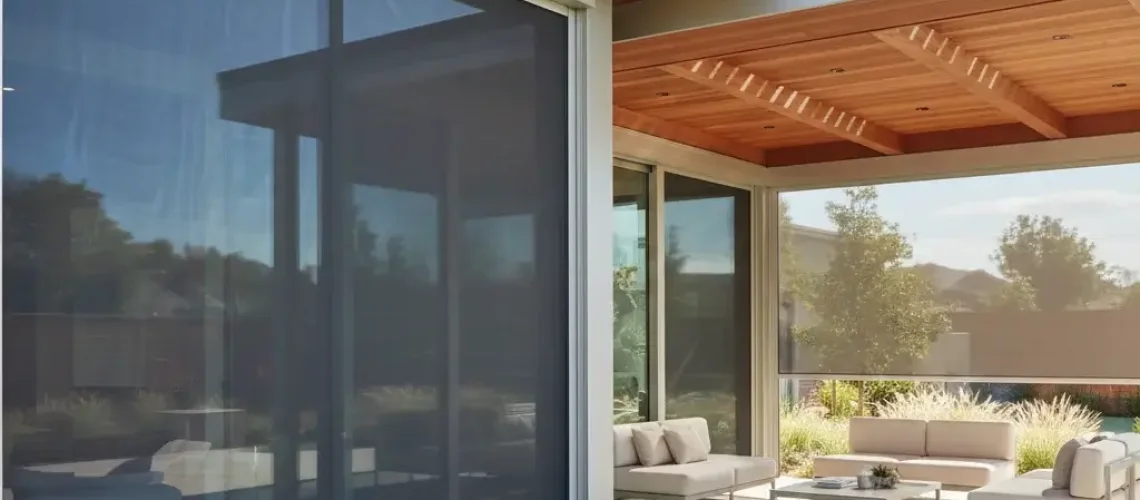
We all know the rhythm of a Canadian year. We spend months bundled up, dreaming of the first warm breeze, and then, almost overnight, the sun arrives with an intensity that catches us off guard. It’s a classic cycle. We go from complaining about the wind chill to squinting against the glare in our living rooms before the snow has fully melted from the north side of the roof.
Here is the reality for homeowners in Toronto and the GTA: if you wait until the first hot weekend to think about shading solutions before spring, you are likely already behind the curve.
Think of your home’s comfort system like a garden. You wouldn’t plant your tulip bulbs in May and expect them to bloom immediately. Similarly, achieving the perfect balance of light, temperature, and privacy requires groundwork laid well before patio season officially opens.
Key Takeaways for Early Planners
- Beat the Rush: Spring is the busiest season for installers; planning in winter guarantees your spot in the queue.
- Design Freedom: You have the time to customize fabrics, colours, and motorization options without pressure.
- Immediate Comfort: Your system is ready the moment the first heatwave hits, not weeks after.
- Smart Integration: Early planning allows for better integration with smart home automation and electrical rough-ins.
Spring Comfort Starts Before the Weather Changes
Spring heat in Ontario has a funny way of arriving unannounced. One week, you are wearing a parka, and the next, you are frantically searching for the air conditioner remote. Smart homeowners understand that comfort is not accidental; it is engineered.
By addressing spring home preparation now, you move from a reactive position to a proactive one. Shading isn’t just about blocking light; it’s about defining how you live in your home. It turns a scorching patio into a usable outdoor living room and prevents your south-facing kitchen from turning into a greenhouse. If you start the conversation now, you are designing a lifestyle upgrade rather than just buying a product to fix a problem.
What Happens When Homeowners Wait Until Spring?
We see it happen every year. The first beautiful weekend in May arrives, and suddenly, every homeowner realizes their patio is too hot, or their living room glare is unbearable. The phone lines light up, and the backlog begins.
Limited availability and installation delays
The supply chain has improved over the past few years, but custom manufacturing still takes time. When demand spikes in April and May, lead times naturally extend. By waiting until the weather turns, you risk finding yourself at the back of a very long line. While you’re waiting for an installation date in mid-July, the early planners are already enjoying their outdoor living solutions with a cold drink in hand.
Rushed decisions and compromised design
Pressure is the enemy of good design. When you are sweating in your own living room, you just want a solution *fast*. This often leads to settling for standard colours or off-the-shelf products that don’t quite match your home’s aesthetic. Planning early lets you request samples, compare fabrics to your brick or siding, and ensure the hardware blends seamlessly with your architecture.
Missed early-season outdoor comfort
Some of the best weather in Toronto happens in late spring. It is that sweet spot before the humidity really kicks in. However, without proper patio shading solutions, the angle of the sun can still make outdoor spaces uncomfortable. If your shading system isn’t installed until summer, you miss out on weeks of prime patio usage.
Why Planning Shading Solutions Early Makes a Difference
There is a distinct calmness to planning a renovation or upgrade during the off-season. You have the bandwidth to think, and so do the professionals you are consulting.
Better design and product selection
When you are not rushing, you can explore the full catalogue of options. Do you need a 5% opacity fabric to keep the view but cut the UV rays? Or perhaps a blackout fabric for a media room? Early planning gives you access to the full spectrum of solar shading materials without worrying about temporary stock shortages on popular items.
Time to evaluate sun exposure and orientation
Have you ever noticed how the sun hits your house differently in March compared to June? In the winter and early spring, the sun is lower in the sky, often penetrating deeper into rooms and causing significant glare. By evaluating your home now, you can identify these unique challenges. A professional can help you model how the light changes, ensuring your shading solutions before spring work year-round, not just at high noon in July.
Shading solutions that integrate cleanly with the home
The best shading looks like it was part of the original architectural plan, not tacked on afterward. If you are planning other renovations, like a new deck, new windows, or siding replacement, planning your shading now allows for hidden recesses or integrated wiring. This results in a cleaner, more sophisticated look.
Understanding Sun Exposure Before Choosing a Shading Solution
The sun is a moving target. Understanding its path is critical to selecting the right product. A static awning might work for noon sun but be useless against the late afternoon glare.
How spring and summer sun angles differ
In summer, the sun rides high. It beats down on roofs and deck surfaces. In spring and autumn, the lower angle of the sun allows light to pass straight through vertical glass. This is why heat control for homes requires a strategy that handles both. We often see homeowners surprised by how hot their homes get in April simply because the sun is bypassing the roof overhangs.
East-, west-, and south-facing challenges
- East-facing: You get the morning blast. It heats up the house before you’ve even had coffee.
- South-facing: This gets the longest duration of exposure. It needs consistent management.
- West-facing: This is usually the most problematic for comfort. The late-day sun is hot, low, and blinding right when you want to use your patio or eat dinner.
Why one shading solution doesn’t fit every space
You might need retractable screens for a covered porch to manage insects and airflow, but heavy-duty exterior shades for a west-facing bedroom window. A “one-size-fits-all” approach rarely works in custom homes. Early planning allows you to mix and match products to suit the specific microclimates around your property.
Also Read: Roller Shutter Control in A Smart Home: What are the Benefits?
Shading Solutions That Benefit Most From Early Planning
Certain systems involve more detailed measurements and custom manufacturing. These are the ones you want to finalize sooner rather than later.
Retractable screens
These are game-changers for Canadian homeowners. Whether manual or motorized, retractable screens disappear when you don’t need them, preserving your view and the look of your doorframes. Because they need to fit millimetre-perfectly into your openings to block bugs and small animals effectively, they require precise measuring. Getting this done before the flies wake up is a clever move.
Motorized retractable screens
For larger openings, such as garage doors or expansive patio enclosures, motorized retractable screens are the gold standard. They allow you to enclose porches, pergolas, and cabanas at the touch of a button. Since these involve electrical connections and often integrate with smart home systems, planning early allows you to coordinate with an electrician, ensuring no unsightly wires are left exposed.
Outdoor shades and drop-down screens
These robust exterior fabrics do more than just look good; they are a versatile shield for your outdoor living space. They block up to 95% of UV rays, significantly reducing heat and preventing your expensive outdoor furniture from fading.
- Spring & Fall: They block cold breezes, keeping the area cozy and free from falling leaves that can stain fabrics.
- Summer: They keep the area dry during high winds and rain, protecting your decor and plants.
- Winter: By keeping the screens down, you prevent snow blow-in and eliminate the need for ugly tarps that can cause mold. This effectively solves the storage problem, allowing you to leave furniture out year-round.
Pergola-integrated shading systems
If you have a pergola, you know it provides style but not always protection. Integrating retractable canopies or side curtains turns a pergola into a true outdoor room. With the addition of heaters, the screens retain warmth, extending your outdoor season well into the colder months. This is structural work; planning it during the off-season ensures your “room” is ready the moment the snow melts.
Comfort and Energy Benefits of Planning Ahead
We often talk about comfort, but let’s talk about physics. Once heat enters your home, your air conditioner has to work double-time to remove it.
Reduced heat gain before peak summer
Passive heat gain in the spring can be surprisingly high. By deploying outdoor shading solutions early, you stop the heat before it enters the building envelope, which makes a huge difference. This keeps the thermal mass of your home (the walls and floors) cooler, giving you a head start when the real summer heat waves hit.
Indoor shades will block UV rays and prevent damage to your floors and indoor furniture, but they will also block your view and light and don’t really reduce heat either. The sun and UV rays heat the glass of your window and radiate it inside, so despite having blinds, your air conditioner will still struggle to keep up. With outdoor retractable screens, you can prevent the UV rays from heating the glass in the first place.
Improved indoor comfort and lower cooling demand
It’s not just about saving a few dollars on the hydro bill, though, obviously, that’s a nice bonus. It’s about the quality of the indoor environment. A room that stays naturally cool feels different from one that is aggressively cooled by A/C. It is quieter, less drafty, and more consistent.
Protecting outdoor furniture and interior finishes from UV
UV rays are relentless. They fade hardwood floors, bleach expensive rugs, and crack outdoor wicker furniture. Solar control isn’t just for your skin; it preserves your assets. Installing protection early prevents that initial spring sun damage that often goes unnoticed until it is too late.
Why Late Spring Is the Worst Time to Start Planning
It sounds counterintuitive, doesn’t it? But spring is “execution season,” not “design season.”
Contractors, installers, and landscapers are in high gear. Their phones are ringing off the hook. If you start the planning process in May, you are trying to have a thoughtful conversation with someone who is running between three job sites, and an installation date of July or August. By starting in late winter, you get the professional’s full attention. You get to ask the detailed questions without feeling like you are holding up the line. ROLLerUP is always prepared, whether it’s on season or off season.
Smart Shading and Automation Benefits
If you are going to upgrade, why not future-proof the home? Smart shading systems are becoming standard for modern homes.
Motorization and remote control
Nobody wants to manually crank five different screens up and down twice a day. Motorization adds a layer of luxury and ensures you actually *use* the shades. If it’s easy, you will use it. There is a smart wifi option available to control it from an app on any mobile device, scheduling and different scenarios. These screens are compatible with Alexa, Google Home, Smart Things, Siri and other smart homes systems.
Timers and preset shading positions
Imagine your west-facing blinds automatically lowering at 4:00 PM, just before the sun starts to bake the living room. Through the wifi option, you can have your smart home system create a schedule and we can also add sun, rain and wind sensors.
Sensor-based shading for sun and wind
Advanced systems can use sun sensors to drop the screens when the glare hits a certain intensity and wind sensors to retract them if a storm blows in. This protects your investment and maximizes energy efficiency without you lifting a finger.
How Early Planning Saves Money and Frustration
We have all made impulse buys that we regretted. When you rush a home improvement project, you often end up paying a premium for speed or settling for a product that doesn’t last.
By planning patio comfort solutions now, you are investing in durability. You have the time to research warranties, compare fabric durability, and choose a reputable installer. This prevents the “buy nice or buy twice” scenario. You are not just buying a screen; you are buying a decade of trouble-free operation.
Common Shading Mistakes Homeowners Make
Even smart homeowners can trip up if they don’t know what to look for.
- Underestimating sun exposure: Thinking a small overhang will be enough. (Spoiler: It usually isn’t.)
- Choosing aesthetics without performance: Picking a fabric because the colour is pretty, only to find out it traps heat.
- Ignoring wind and weather: Installing a light-duty indoor shade in an exposed outdoor area.
- Not future-proofing with motorization: Saving money upfront on manual cranks, only to regret the daily hassle later.
- Only shop by price tag: Buying the cheap solution might save you some money upfront, but will lead you to either buy a replacement soon or not use the product because it’s not effective.
How to Plan the Right Shading Solution Before Spring
So, where do you start? You don’t need to be an architect, but you do need a plan. ROLLerUP have plenty of experience to find the best solution for you.
Assess how the space is used.
Do you eat dinner on the patio? Then you need protection from the low evening sun. Do you work from home in the dining room? Then you need glare reduction for your computer screen.
Identify problem areas (heat, glare, insects)
Be specific about the pain points. Is it the heat? The UV damage? The mosquitoes? We offer meshes that provide all of these solutions in one mesh.
Decide between manual and motorized systems.
Budget plays a role here, but so does functionality. For large, heavy spans, motorization is almost a necessity. For smaller, rarely used windows, a manual might be fine.
Consult a professional early
This is the most critical step. A professional can look at your property and spot issues you might miss. They can tell you if your mounting surface needs reinforcement or if there is a better way to route the power.
Also Read: Roller Shutters Pros & Cons – Are They Worth It?
FAQs
When should homeowners plan shading solutions?
Homeowners should begin planning shading solutions in late winter (January or February). This timing avoids the spring rush, ensures access to preferred materials, and guarantees installation is complete before the first heatwave or insect season arrives, maximizing your outdoor season.
Are shading solutions worth planning before spring?
Yes, planning early secures better lead times and allows for thoughtful design. It ensures your home is protected from early spring glare and UV damage, and guarantees your outdoor spaces are comfortable the moment the weather warms up.
What shading solutions work best for patios?
Motorized retractable screens and durable outdoor shades are ideal for patios. They provide flexible protection against insects, wind, rain, small animals, even surprise April snowfall, and low-angle sun while preserving views and airflow, adapting instantly to changing weather conditions.
Do retractable screens reduce heat?
Yes, retractable screens with solar mesh can significantly reduce heat gain. By blocking the sun’s rays before they hit your windows or enter your patio, they can lower indoor temperatures and reduce the load on your air conditioning.
Are motorized shading systems worth it?
Motorized systems offer superior convenience and longevity. They encourage consistent use via automation (app/sensors), eliminate dangerous cords, and reduce wear and tear caused by manual handling, making them a smart long-term investment.
Can shading help reduce cooling costs?
Absolutely. Exterior shading can block up to 99% of solar heat gain before it enters the home. This passive cooling method significantly reduces the workload on HVAC systems, leading to lower energy bills during spring and summer.
Secure Your Summer Comfort Today
Waiting for the heat to arrive before acting is a recipe for a sweaty, stressful spring. By prioritizing your shading strategy now, you are securing a season of effortless comfort. You get the design you want, the installation date you prefer, and the peace of mind that comes with being prepared. What’s not to love?
Whether you are looking to banish bugs from your patio or cool down a sun-drenched kitchen, the best time to start is while the air is still crisp. Would you like to beat the rush and finalize your design? But even if you “missed” the early season, no worries, you can still order and install the screens and extend your outdoor season into the colder months and protect your outdoors during the winter.
Book a shading consultation with ROLLerUP today and ensure your home is ready for whatever the Canadian weather brings.