Home » The Ultimate Guide to Retractable Awnings: Costs, Sun Protection, and Motorized Options
The Ultimate Guide to Retractable Awnings: Costs, Sun Protection, and Motorized Options
Your backyard should be the place you escape to, not the place you escape from.
But when the afternoon sun turns your patio into an absolute furnace, or a surprise rain shower cuts dinner short, that outdoor space you invested in stops earning its keep. You start eating inside again, the patio furniture sits unused, and the barbecue collects dust. Does this sound familiar?
You have probably already looked into solutions. Permanent roofs feel like overkill, and umbrellas just blow over in the wind. Pergolas are beautiful, but they do not always solve the problem of heat. Every time you search for a retractable awning, you are hit with vague pricing, conflicting fabric advice, and dozens of brands that all claim to be the top choice. It is exhausting. We get it.
Underneath the research fatigue is a quieter worry. What if you spend thousands on the wrong product and have to live with the mistake every summer? You worked hard for your home, especially if you are navigating the varying seasons here in Ontario, and you deserve an outdoor space that actually gets used. You need a company that treats your project like it matters, not like another transaction.
This guide will walk you through exactly what these shade systems are, how much they really cost, which options matter, and how to make a confident decision.
Key Takeaways
- Cost Expectations: Quality retractable awnings typically range from $2,500 to $8,000+, depending on size and features.
- Manual vs. Motorized: Motorized options offer premium convenience and smart automation, while manual versions are budget-friendly and simple.
- Cooling Power: A premium awning can lower the temperature of your patio surface by 7 to 10°C and block up to 98% of UV rays.
- Lifespan: With the right fabric (like solution-dyed acrylic) and proper winter care, expect 10 to 15 years of seasonal use.
- The ROLLerUP Difference: We offer vendor-neutral advice, pairing you with the exact Canadian-made system your unique home needs.
What Is a Retractable Awning?
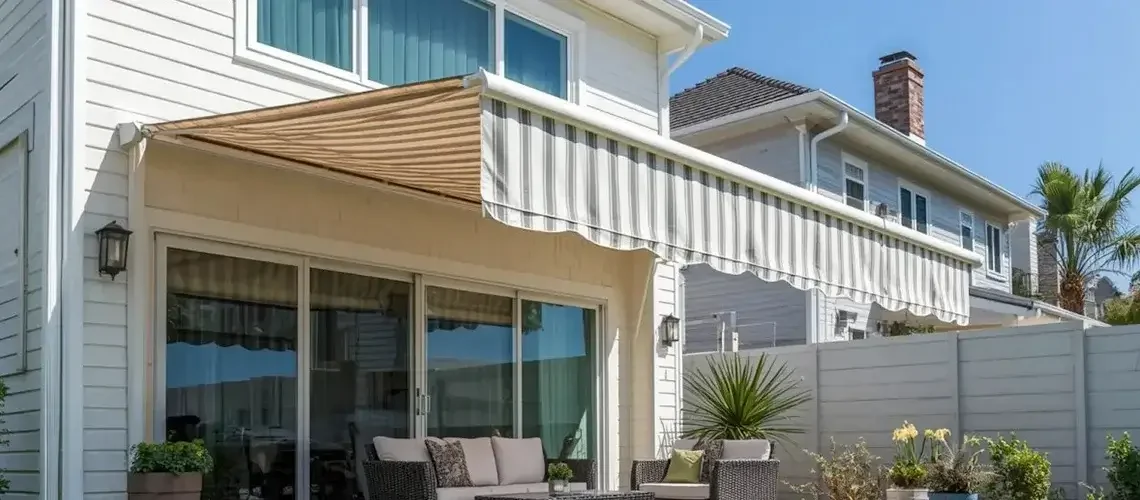
A retractable awning is an extendable shade system that mounts to your home’s exterior wall or a freestanding structure. It extends outward over your patio, deck, or balcony, providing instant relief from the elements.
How Retractable Awnings Work
When you want shade, you extend the system. When you want open sky or when bad weather rolls in, you retract it back against the wall. This protects both the fabric and the hardware. That flexibility is the entire point.
Two operating systems dominate the market. You can choose manual operation, where a hand crank extends the arms. Alternatively, you can opt for motorized operation, where a hidden tubular motor does all the heavy lifting. Both rely on spring-loaded lateral arms that hold the fabric under tension, keeping it pristine and taut.
Common Applications
Retractable awnings are incredibly versatile. They are used over residential patios, raised decks, second-floor balconies, outdoor dining areas, and commercial storefronts. The right size and projection depend entirely on your specific space. Off-the-shelf sizing rarely works for a real home, which is why we focus on tailored outdoor shade solutions.
Types of Retractable Awnings
Lateral Arm Awnings
This is the most common style for residential patios. Folding arms extend the fabric outward, giving you wide, unobstructed shade coverage with no posts getting in your way.
Semi-Cassette vs Full-Cassette Awnings
A semi-cassette awning features a partial hood that protects the roller tube and motor.
A full-cassette awning fully encloses the fabric and hardware when retracted. This means everything is sealed safely away from the sun, rain, and debris when not in use. Full-cassette systems do cost more upfront. However, they typically last longer because the fabric is not exposed to harsh weather year-round.
Drop-Down Shades / Solar Screens
These are vertical retractable screens designed to block low-angle sun. They add a wonderful layer of privacy and reduce annoying glare. Homeowners often pair them with an overhead awning to create a cozy, sheltered environment.
Pergola-Style Retractable Awnings
For larger outdoor rooms, retractable pergolas and louvred roofs offer a more architectural, premium solution. They come with built-in structural support and integrated drainage, making them perfect for expansive entertaining spaces.
Quick Cost Overview
Pricing varies widely based on size, motorization, fabric, and installation complexity. For most Canadian homeowners, a quality project typically runs from $2,500 to $8,000+. If you are looking for an awning cost guide, the table below provides a helpful starting point.
Typical Retractable Awning Costs
| Awning Type | Typical Price Range | Best For |
| Manual Lateral Arm | $2,500 – $4,000 | Smaller patios, budget-conscious buyers |
| Motorized Lateral Arm | $4,500 – $6,500 | Medium to large decks, daily convenience |
| Full-Cassette Motorized | $6,000 – $8,000+ | Premium protection, modern aesthetics |
| Custom / Pergola Systems | $8,000+ | Expansive outdoor living rooms |
Note: Custom sizing, premium fabrics, electrical work, and smart automation will naturally affect the final retractable awning cost.
What Affects Retractable Awning Cost?
Size & Projection
Width and extension distance are the biggest cost drivers. Custom dimensions tailored to your unique patio will always cost a bit more than stock sizes.
Manual vs Motorized Operation
Adding motor systems, remote controls, and smart home integration will raise the price. However, many homeowners find that the added convenience pays for itself in how often they use the space.
Fabric Selection
Your choice of material matters. Premium acrylic fabrics cost more than basic polyester but offer vastly superior longevity and fade resistance.
Frame Quality
A heavy-duty aluminum frame with professional powder coating ensures your investment survives rough weather without rusting or buckling.
Additional Features
Want to upgrade your experience? Wind sensors, rain sensors, built-in LED lighting, side screens, and smartphone control features will add to the overall investment.
Installation Complexity
Your retractable awning installation cost depends heavily on the mounting surface. Wall mounting is standard, but requiring electrical access or structural reinforcement will bump up the final tally.
Looking for a customized retractable awning quote? Contact ROLLerUP today to get a transparent assessment for your home.
Manual vs Motorized Retractable Awnings
Manual Awnings
Pros:
- Lower upfront cost.
- No electrical wiring required.
- Simpler long-term mechanical maintenance.
Cons:
- Less convenient for daily use.
- Requires physical effort to crank, which gets old quickly on larger units.
Motorized Awnings
If you are weighing manual vs motorized awnings, the motor is often a game-changer. Motorized retractable awnings add real daily convenience. Push a button, and the shade extends in seconds.
Pros:
- Push-button convenience with remote controls.
- Smart home integration via smartphone apps.
- Sensor automation that protects the awning in bad weather.
- A premium, effortless user experience.
Cons:
- Higher initial investment.
- Requires electrical access.
Explore premium motorized awning options designed for your outdoor space. Contact ROLLerUP to discover how easy outdoor living can be.
Sun Protection & Energy Efficiency Benefits
UV Protection
A quality shade system blocks up to 98% of harmful UV radiation. UV protection awnings keep your skin safe, prevent your outdoor furniture from fading, and vastly improve your overall outdoor comfort.
Temperature Reduction
The cooling effect is the benefit that homeowners consistently underestimate before installation and rave about after. Sun protection awnings can lower the surface temperature of your patio by 7 to 10°C. They also reduce the heat gain hitting your windows, keeping the inside of your home significantly cooler.
Energy Savings
Because less direct sunlight enters your home, your air conditioner does not have to work nearly as hard during peak summer hours. These reduced cooling demands translate to actual savings on your energy bill.
Best Fabric Options for Retractable Awnings
Solution-Dyed Acrylic Fabrics
This is the gold standard for residential properties. The colour is built right into the fibre itself, meaning it resists fading, repels water, and handles intense UV exposure for a decade or more of regular seasonal use.
Vinyl Fabrics
Vinyl-coated fabrics are fully waterproof. They are exceptionally durable and often used for commercial storefronts where heavy rain protection is critical.
Polyester Fabrics
Polyester is the budget-friendly option. It is fine for short-term use, but it fades faster and simply does not hold up as well as acrylic over the years.
Weather Resistance & Durability
Wind Considerations
High winds are the enemy of any shade structure. You must retract the awning during strong gusts. Thankfully, modern smart systems feature wind sensors that automatically retract the fabric to prevent damage.
Rain Performance
While designed for shade, these systems perform well in rain. It is vital to ensure proper water runoff so moisture does not pool. Remember the difference between waterproof and water-resistant materials when making your choice.
Winter Storage Considerations
Our Ontario winters are tough. Seasonal care is non-negotiable. You must store or fully retract the awning to protect it from heavy snow loads and ice damage. Treat it as a three-season accessory, not a permanent roof.
Expected Lifespan
A well-built system, properly installed and maintained, will typically deliver 10 to 15 years of solid seasonal service. Consistent maintenance is the key to reaching the higher end of that typical lifespan range.
Retractable Awning Maintenance
Cleaning Best Practices
Keep it simple. Use mild soap, a soft brush, and a gentle hose rinse. The most crucial rule? Always let the fabric dry completely before retracting it.
Mechanical Maintenance
Perform a visual motor inspection and routine hardware checks at the start and end of every season. Make sure the lateral arms move smoothly and without grinding.
Fabric Care Tips
Do not leave wet fabric rolled up for extended periods, as this invites mould and mildew. Avoiding prolonged moisture storage keeps the material looking fresh year after year.
Retractable Awnings vs Permanent Patio Covers
Flexibility
Permanent roofs block the sun permanently. Retractable options offer shade on demand. You get the sun when you want it and shelter when you need it.
Cost Differences
The cost of retractable deck awnings is typically much lower than the cost of framing, roofing, and shingling a full permanent patio cover.
Design Aesthetics
Awnings provide a modern, minimalist appearance that elegantly blends into your home’s exterior without looking bulky.
Installation Complexity
Mounting an awning to your existing structure is vastly easier and faster than undertaking a massive structural roof addition.
How to Choose the Best Retractable Awning
Ready to reclaim your patio? Here is a simple framework to help you choose the best retractable awnings for your home:
Consider Your Patio Size
Measure your space. The right projection ensures your dining table actually stays in the shade.
Decide Between Manual or Motorized
Be honest with yourself about your habits. If you want a seamless experience, patio awnings with remote control are usually the smarter long-term play.
Evaluate Sun Exposure
Which way does your backyard face? West-facing patios often require a larger drop-down screen to block that blinding late-afternoon glare.
Choose Durable Fabrics
Pick a solution-dyed acrylic that can withstand the elements without losing its vibrant colour.
Consider Smart Features
Wind sensors are fantastic insurance policies for your investment, automatically pulling the awning in if a storm brews while you are away.
Work With Professional Installers
Skip the DIY headache. Partner with a vendor-neutral expert who will match the product to your wall, your wind exposure, and your budget.
What to Ask Before Buying a Retractable Awning
Do not sign a contract until you have answers to these essential questions:
- What wind rating does the awning have?
- Is installation included in the quote?
- What warranty is offered on the motor and the fabric?
- Is electrical work included for motorized units?
- Which fabric is best for UV protection in my specific yard?
- Are replacement fabrics readily available down the road?
- What routine maintenance is required?
Getting this choice right means walking out your patio door into shade at exactly the moment you want it. Dinner outside in July. Coffee outside in September. A backyard that finally pays you back.
Ready to transform your patio into a more comfortable outdoor living space? Contact ROLLerUP for a customized retractable awning solution tailored perfectly to your home.
Facebook
Twitter
LinkedIn
Pinterest