Home » Manual vs. Motorized Retractable Awnings: Is the Upgrade Worth It?
Manual vs. Motorized Retractable Awnings: Is the Upgrade Worth It?
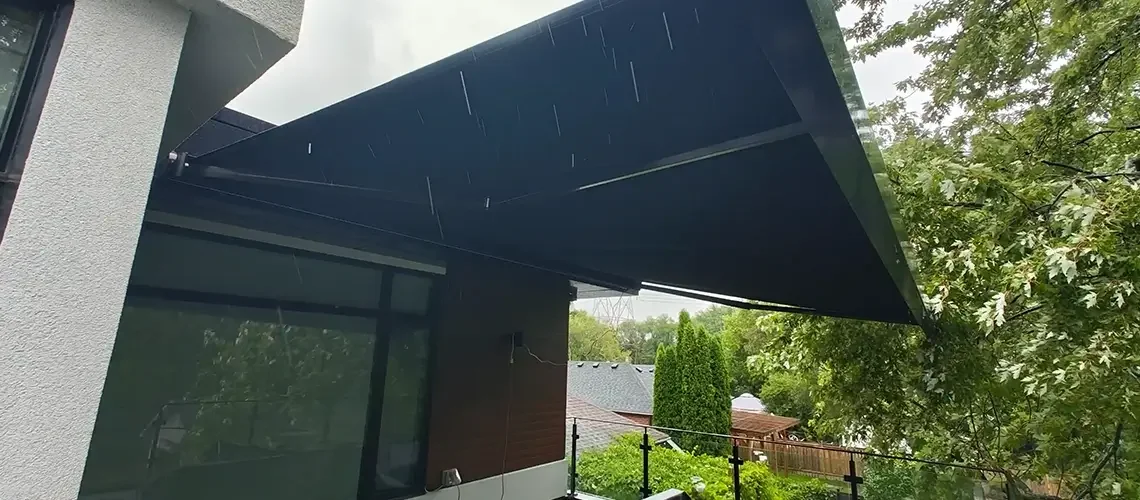
Picture this. Saturday in July, patio’s full, and the sun swings around to blast everyone at the table. You get up, grab the crank handle, and start winding the awning out. Twenty turns later you’re sweating more than your guests. An hour after that the wind kicks up out of nowhere and you’re back outside trying to retract the fabric before a gust turns your afternoon into an insurance claim.
Sound familiar?
You’re probably second-guessing your setup. This guide walks through how each type works, the pros and cons, the cost side, the upkeep, and who each one suits best. By the end you’ll know where you land.
Key Takeaways
- Manual awnings cost less upfront and need no wiring, which keeps installation simple in more locations.
- Motorized awnings open with a remote, switch or app, cutting opening and retracting time to seconds and boosting usage by up to 75%.
- Sensors can retract a motorized awning automatically in wind, reducing the risk of damage when nobody’s home.
- The right choice depends on size, use and budget, not on which one sounds fancier at the dinner party.
What Is a Manual Retractable Awning?
A manual retractable awning uses a hand crank to extend and retract the fabric arm. You hook the rod into a gearbox near the top of the frame. Wind it one way to open, the other way to close. No wiring, motor or app required, just a mechanical gear doing what gears do.
Manual models suit smaller openings, cottages, and homes where power at the install point is tricky to run. They also suit budget-conscious projects where the goal is shade without the add-ons. Our retractable awnings come in both manual and motorized configurations, so you’re not locked into one path from the start.
What Is a Motorized Retractable Awning?
A motorized retractable awning swaps the crank for an electric Somfy tubular motor built into the roller tube. You operate it with a handheld remote, a hardwired wall switch, or a smart home app through a compatible hub. The hardware is 120VAC and runs off a standard household circuit.
The real upgrade? Optional accessories.
Wind sensors retract the awning when gusts hit a set threshold. Sun sensors extend it when light levels rise. Smart hubs allow voice control and scheduling. For a wide awning over a large patio, that convenience changes how often the awning actually gets used. And that’s the whole point of owning one.
Manual vs. Motorized Awnings: Quick Comparison
Here are the key differences at a glance.
| Feature | Manual Awning | Motorized Awning |
| Operation | Hand crank | Remote, switch or app |
| Upfront Cost | Lower | Higher |
| Convenience | Takes effort and time | Seconds to open or close |
| Weather Protection | Manual retraction only | Optional wind sensor retracts automatically |
| Electrical Needs | None | 120V AC circuit at install location |
| Maintenance | Crank and gears, minimal | Motor and sensors, minimal |
| Best For | Small awnings, seasonal use | Large patios, daily use, smart homes |
Pros and Cons of Manual Awnings
Pros of Manual Awnings
Manual awnings win on simplicity:
- Lower upfront cost
- No electrician needed
- Fewer moving parts to fail
If the power goes out during a summer storm your awning still works fine, because your arm is the power source. The mechanical gear design has been around for decades and holds up well when properly cared for.
Cons of Manual Awnings
Cranking is fine on a small awning but on a wide one it turns into a workout. Operation is slower, which means you might skip opening it on days you otherwise would.
And if you forget to retract it before a storm? There’s no sensor to save the fabric or frame. Warranty coverage doesn’t extend to damage caused by heavy winds, hail, or rain.
Pros and Cons of Motorized Awnings
Pros of Motorized Awnings
One-touch convenience is the headline benefit. Motorized operation reduces opening and retracting time to mere seconds, which pushes usage up by as much as 75%. That matters more than it sounds. An awning you actually use is an awning that pays you back in shade, cooler indoor temperatures, and up to a 25% reduction in air-conditioning costs.
Easier use helps older family members, and automatic wind and sun response adds a layer of protection when nobody’s home. Smart home integration lets you schedule retraction or trigger it by voice.
Cons of Motorized Awnings
Higher upfront cost is the obvious one. You need power at the install location, which may mean hiring an electrician. Motors and electronics are covered under warranty for a defined period, though they can need service over the years. More components mean more things that can eventually need attention.
Which Awning Is Right for You?
The answer depends on how the awning will be used day to day.
Best Option for Budget-Focused Projects
A manual awning fits smaller budgets and smaller openings. If the awning is modest in size and you’re comfortable with a crank, the savings on motor, wiring, and accessories are real money back in your pocket.
Best Option for Large Patios and Decks
Motorized operation is the smart call for wide or high awnings. Cranking a large unit several times a week gets old fast. Motorized units open in seconds without the sweat equity.
Best Option for Windy Locations
A properly configured wind sensor retracts a motorized awning automatically when gusts hit the set threshold. It helps reduce damage risk, though it’s not a guarantee against every storm, and warranty exclusions still apply for extreme weather.
Best Option for Daily Use
If you plan to use the awning daily, motorized operation makes the difference between an awning that lives extended and one that stays rolled up because cranking it feels like a chore.
Cost Comparison: Upfront Price vs. Long-Term Value
Motorized awnings cost more upfront because of the motor, controls, and optional sensors. The higher usage rate changes the math, though. An awning used 75% more often delivers more shade, more comfort, and more energy savings through reduced air-conditioning load.
Wind sensors help reduce damage risk, though they don’t guarantee a longer lifespan, and acts of nature remain outside warranty coverage. For a closer look at numbers, see our breakdown of awning costs in Canada.
Maintenance, Durability and Lifespan
Both types need the same basic care: periodic fabric cleaning and frame checks. Quality acrylic fabrics stay bright and strong for over 10 years when properly maintained.
Manual cranks and gears need little attention beyond occasional lubrication. Motors and sensors may need service over time and are covered under a defined warranty period. Retract both types before snow and storms, since weather damage falls outside warranty coverage.
When a Manual Awning Still Makes Sense
A manual awning is a smart choice for small balconies, cottages, seasonal-use properties, or spots without nearby power. It also fits when the budget is tight and the opening is modest. Converting a manual awning to motorized operation depends on model compatibility and should be confirmed with ROLLerUP before you commit to a retrofit.
Picking the Awning That Fits Your Patio, Your Budget, and Your Summer
Manual awnings win on simplicity and price. Motorized awnings win on convenience, daily usability, and wind-sensor protection. Both deliver the core benefits of shade, lower indoor temperatures, and reduced UV exposure, and both need professional installation to perform as designed.
The upgrade is worth it when the awning is large, used often, or exposed to shifting weather. The manual version holds its ground when the opening is small and the budget is the deciding factor.
Here’s how working with ROLLerUP looks.
First, tell us about your space and how you want to use it. Second, we spec the right product from Canada’s top manufacturers to match your patio, your climate, and your budget. Third, we install it and stand behind it long after the last screw goes in with a product warranty of up to 5 years.
Ready to stop guessing? Book your free, no-obligation consultation today. Get an estimate and we’ll walk your patio, deck, or balcony with you and give you a straight answer on which awning fits your Ontario home.Get An Estimate | Security Shutters & Grilles | ROLLerUP
Facebook
Twitter
LinkedIn
Pinterest